
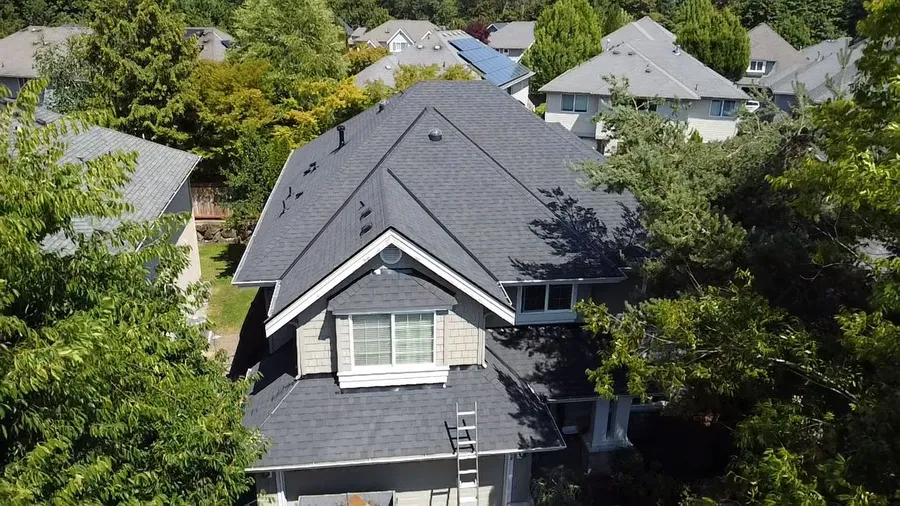
The short answer
In Western Washington, a 3-tab asphalt roof usually lasts 15–20 years, architectural shingles 25–30, cedar shake 20–30 with regular upkeep, and metal 40–70. Most asphalt roofs here land at the lower end of those ranges — constant moisture, moss, and fir debris age a roof faster than in drier climates.
If you own a home in King or Snohomish County, you already know our weather is a category of its own. Months of rain, damp air, moss, and the occasional wind or snowstorm all take a toll, and your roof takes the brunt of it. So how long should your roof actually last out here?
Average roof lifespan by material
The honest answer is that it depends on the material, the installation, and how well the roof is maintained. Here’s what we typically see in Western Washington:
| Material | Typical lifespan here | What usually ends it |
|---|---|---|
| Asphalt 3-tab shingles | 15–20 years | Granule loss and moisture breakdown |
| Architectural (dimensional) shingles | 25–30 years | Moss on shaded slopes, aging seals |
| Cedar shake | 20–30 years | Rot and moss without regular treatment |
| Metal roofing | 40–70 years | Fastener and sealant wear — little else |
Those numbers assume a quality installation and a climate that’s kind to your roof. Ours usually isn’t. In practice, most asphalt roofs in our area land on the lower end of their range.
Why roofs wear out faster here
Three things age a Pacific Northwest roof faster than the brochure promises:
- Moisture. Constant damp keeps shingles from fully drying, which accelerates granule loss and breakdown.
- Moss and algae. Our shaded, wet climate is a paradise for moss. Left alone, it lifts and separates shingles, letting water underneath.
- Debris. Fir needles and leaves trap moisture against the roof surface and clog gutters, backing water up under the shingles.
Signs your roof is near the end
You don’t have to wait for a leak to find out your roof is failing. Watch for:
- Bald spots where granules have worn away
- Curling, cupping, or cracked shingles
- Heavy moss growth, especially on north-facing slopes
- Granules collecting in your gutters
- Daylight or water stains in the attic
How to get the most years out of your roof
Routine care makes a real difference. Keep your gutters clear, have moss treated before it spreads, and get a professional inspection every few years, especially after a major storm. Catching small issues early is what turns a repair into decades of extra life instead of an early replacement.
If your roof is showing its age, we’re happy to take a look and give you an honest assessment. A free inspection tells you exactly where you stand, no pressure, no upsell.
Frequently Asked Questions
How often should I have my roof inspected in Western Washington?
Every two to three years for a roof under 15 years old, then annually as it ages — and always after a major wind or snow storm. Most problems we find during inspections would have been invisible from the ground.
Does moss really shorten a roof's life?
Yes, and by a lot. Moss holds water against the shingles and slowly lifts their edges, which lets rain get underneath. A moss treatment costs a fraction of the repairs it prevents, so don't wait until the roof looks green from the street.
Can I extend the life of an older asphalt roof?
Often, yes. Keeping gutters clear, treating moss early, and fixing small issues like cracked flashing can buy an aging roof several more years. What maintenance can't fix is rotted decking — once water has been getting into the structure, replacement is the honest answer.
How do I find out how old my roof is?
Check your home purchase paperwork or county permit records for the last reroof. If there's no record, an inspection can estimate the age fairly accurately from granule loss, shingle condition, and the fasteners used.