
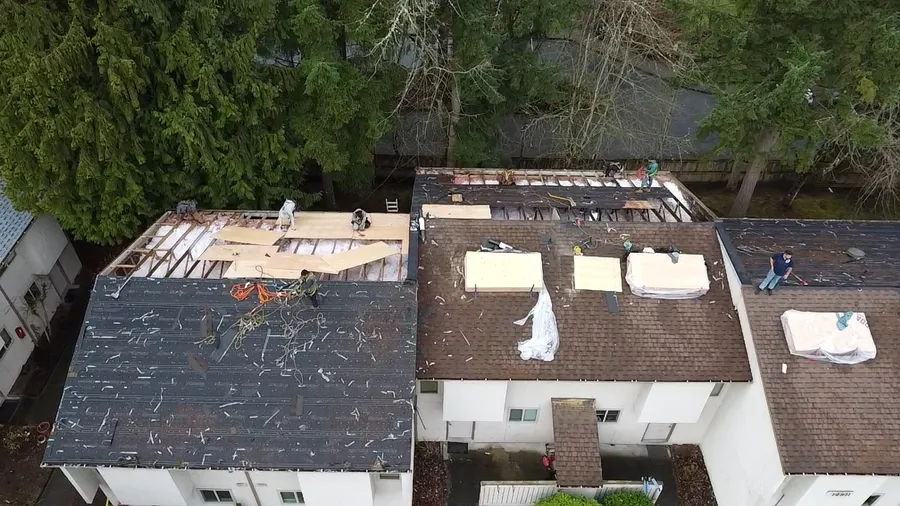
The short answer
After storm damage: keep everyone off the roof, get it tarped fast to stop the water, photograph everything before cleanup, and have a roofer inspect before the insurance adjuster arrives. Sudden storm damage is typically covered by homeowners insurance; gradual wear is not — which is why documentation decides claims.
When a storm rolls through King or Snohomish County and leaves your roof torn up, it’s stressful, and the clock is ticking before more water gets in. Here’s how to protect your home and handle the insurance side without the headache.
Step 1: Make sure everyone is safe
Don’t go climbing on a damaged roof, and stay clear of downed power lines or sagging ceilings. Damage can be assessed from the ground or by a professional. Your safety comes first, always.
Step 2: Prevent further damage
Insurance companies expect you to take reasonable steps to stop the damage from getting worse. That usually means emergency tarping over exposed areas. This is where a fast-response roofer earns their keep, a tarp in the right place can save you from thousands in interior water damage while the claim is processed.
Step 3: Document everything
Before any repairs, document the damage thoroughly:
- Take clear photos and video from the ground
- Note the date and time of the storm
- Save receipts for any emergency work (like tarping)
- Keep a record of every conversation with your insurer
Good documentation is the difference between a smooth claim and a denied one.
Step 4: Call a roofer before the adjuster
This is the step most homeowners skip, and regret. Having a professional inspect your roof before the insurance adjuster arrives means you walk into the process knowing the full extent of the damage. Adjusters are thorough, but they don’t always catch everything, and you’re the one who lives with the result.
A good roofer can also meet the adjuster on-site to make sure nothing legitimate gets overlooked.
Step 5: File the claim
Contact your insurer, provide your documentation, and schedule the adjuster visit. Be specific about what happened and when. Once the claim is approved, your roofer can move forward with the full restoration.
We handle the roof and the paperwork
We’ve walked countless homeowners through storm claims, and we work directly with insurance companies to keep the process moving. We’ll inspect the damage, tarp what needs tarping, document everything your insurer needs, and restore your roof properly.
If a storm hit your home, don’t wait for the next rain. Get a free storm damage inspection or call us at (425) 568-5162, fast response is what limits the damage.
Frequently Asked Questions
Does homeowners insurance cover roof storm damage in Washington?
Generally yes, when the damage is sudden and storm-caused — wind-lifted shingles, hail, a fallen branch. What policies don't cover is gradual deterioration, which is why insurers look closely at the roof's age and condition. Good documentation of the storm event is what separates the two.
Should I call a roofer or my insurance company first?
Call the roofer first if water is actively getting in — emergency tarping can't wait for a claim number, and insurers expect you to prevent further damage. Then file promptly. Save the tarping receipt; it's typically reimbursable as emergency mitigation.
Will filing a roof claim raise my insurance premium?
A single weather claim usually affects your premium less than surcharge-triggering claims like liability, but it varies by carrier and claims history. For minor damage near your deductible, it may not be worth filing — we'll give you a repair estimate first so you can decide with real numbers.
What if my insurance claim is denied?
Denials are often about documentation, not the damage itself. You can request a re-inspection, submit a detailed roofer's report with photos, and escalate through your carrier's appeal process. We've helped homeowners overturn denials by documenting what the first adjuster missed.