
The short answer
An adjuster looks at three things on a roof: damage a specific storm caused, like shingles torn or lifted by wind or a branch through one section; the roof's age and condition before that storm, because wear and age aren't covered; and how big the repair is, which they photograph and measure. In Washington, an insurer gets 30 days after a claim is filed to inspect, and it can ask for photos or a virtual inspection instead of sending someone. The best preparation is your own photos, the date of the storm, and a record of how old the roof is.
When a windstorm tears into a roof in Snohomish County or on the east side of King County, the insurance claim often comes down to one visit. Someone working for your insurer looks at the roof and decides what the storm did, what was already there, and what the fix should cost.
Our storm damage insurance guide covers the whole claim, from the first phone call to the finished roof. This one stays with the inspection: what the adjuster checks, and how to get ready for the visit.
What the adjuster is there to decide
The National Association of Insurance Commissioners (NAIC) describes the adjuster’s job in two parts. First, work out how much damage there is, what can be repaired or replaced, and at what cost. Then read your policy to see whether that damage is covered and which limits and deductible apply. On a roof claim, the first part means photos and measurements of the roof, plus a walk through the house to see what the water reached and any temporary repair, such as a tarp.
Not every claim gets a visit. Washington’s Office of the Insurance Commissioner says insurers aren’t required to send anyone. They may send an adjuster, a contractor, or another professional, and some ask for photos or run a virtual inspection through an app. Whichever way it goes, the insurer has 30 days from the date you filed the claim to inspect the damage.
Storm damage or wear
This is the question behind a lot of roof claims. The Commissioner’s list of what a homeowner policy usually covers includes wind, wind-driven rain, and falling trees. Leaks that develop slowly are a different story: insurers generally treat them as maintenance problems, not sudden accidents.
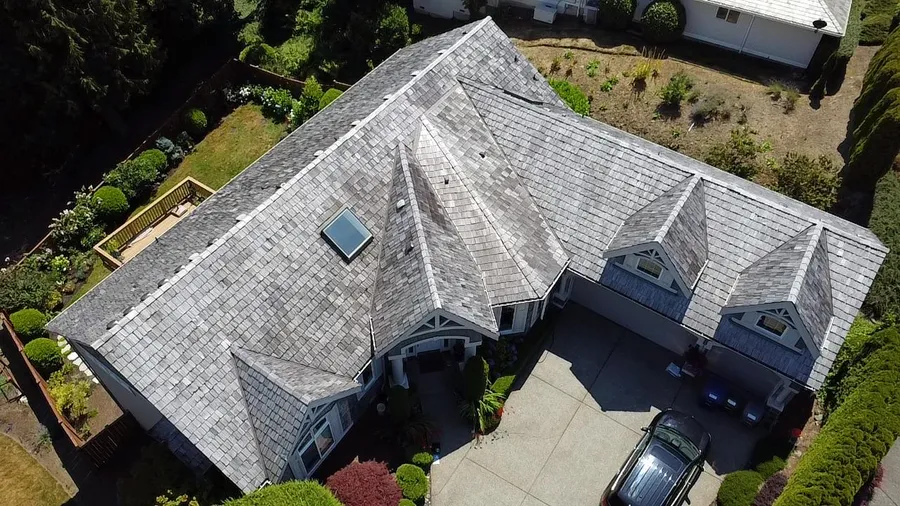
Storm damage usually has a date and a direction. Shingles are torn off or lifted on the side the wind hit, a branch has come down through one section, or flashing has pulled loose at a chimney or a wall. Wear looks different and tends to cover more of the roof: bald patches where the granules are gone, shingles curling or cracking across whole slopes, moss lifting the edges on the shady side. Many roofs show some of each, and the adjuster has to tell them apart.
Around here, the storm part is usually wind. The Western Regional Climate Center notes that the strongest winds in western Washington generally come out of the south or southwest, mostly in late fall and winter, and that damaging hailstorms rarely, if ever, occur in most of this side of the state. In Snohomish County and on the Eastside, it’s the winter windstorms that bring down branches and tear up shingles.
Why the age of your roof comes up
Insurers look closely at a roof’s age and condition, and there’s a physical reason for it. The Insurance Institute for Business & Home Safety (IBHS) found that shingles which lose the sealant bond holding them flat are much more likely to fail in strong wind, and in its 10-year roof aging study, most asphalt shingle products began losing wind resistance somewhere between year five and year ten. An older roof can lose shingles in a storm that a newer one rides out.
That doesn’t make wind damage on an older roof any less real. Age can still affect the payment, depending on your coverage. Replacement cost coverage, which the Commissioner says is standard on most homeowner policies, pays today’s cost to repair or replace without deducting depreciation. Actual cash value coverage subtracts depreciation, so the same damage on an older roof can pay less. Washington adds one rule of its own: insurers here can’t depreciate labor when they figure the actual cash value of a property claim. Your policy or your agent can tell you which kind of coverage you have.
Not sure how old the roof is? The paperwork from when you bought the house, or the permit records for the last reroof, will usually tell you. Our post on how long a roof lasts in the Pacific Northwest has typical lifespans by material.
What gets photographed and measured
Once the cause is clear, the inspection turns to size. How many shingles or how much of a slope needs work, the pitch of the roof, how many old layers would come off, and whether the decking underneath got wet: those set the price of any roofing job, and the adjuster’s estimate has to account for them too. Inside, the adjuster looks at the ceilings, walls, and belongings the water reached.
Temporary repairs get a look as well. The Commissioner advises covering a leaking roof if it’s safe, saving the receipts for tarps and other temporary repairs, and waiting on permanent repairs until the insurer has seen the property and agreed with you on the work. If water is coming in right now, our emergency roof repair page explains the tarp and what to do inside the house.
Getting ready for the visit
Start with the photos and receipts from the insurance claim guide. Then add the things this visit turns on. Most of what follows comes from the NAIC’s post-disaster claims guide.
Before the adjuster comes:
- Find something that shows the roof’s age: purchase papers, permit records, or the invoice from the last reroof.
- Make a list of where you saw damage, inside and out, with the date you first noticed each spot. A stain that showed up the morning after a windstorm tells a different story than one that has been spreading since spring.
- Get a written estimate from a roofer if there’s time. The NAIC suggests getting written bids before the inspection when you can.
- Pull out any photos of the roof from before the storm (more on that below).
While the adjuster is there:
- Be home. The NAIC says you should be, so you can point out where you think the damage is and hand over your photos, your list, and the estimate.
- Take notes. Get the adjuster’s name and contact information, ask what happens next and when you’ll hear back, and ask if they need anything else from you.
Having a roofer at the inspection
The NAIC notes that it can help to have your contractor meet with you and the adjuster. We can meet your adjuster on site, show what we found up close, and share the photos from our inspection.
The claim itself stays between you and your insurer. You can deal with the insurer’s own adjuster, or bring in a public adjuster, which the Commissioner describes as a licensed person who works on your behalf to appraise and negotiate a property claim. Before you hire one, make sure the license is from Washington. And if any contractor asks you to sign an “assignment of benefits,” the Commissioner warns that it can hand that contractor the power to negotiate with your insurer and settle the claim without your approval. Talk to your agent or insurer before you sign one.
What to document before the next storm
A roof claim is easier to sort out when you can show what the roof looked like before the storm. The Commissioner suggests taking photos or video of the outside of your home from several places, and keeping your policy, receipts, photos, and other records somewhere safe away from the house. For the roof, a few clear shots of each slope from the ground while it’s in good shape will do, along with the invoice or permit for the last reroof and receipts for any repairs since.
If you’d rather have a roofer take a look, a free inspection gets you photos of the roof as it is today and a straight answer about any wear we find.
We inspect storm-damaged roofs across Snohomish County, from Everett and Lake Stevens to Snohomish, and on the Eastside in Bellevue, Redmond, and Sammamish. Storm inspections are free. Request one or call (425) 568-5162, and see our storm damage and insurance page for how we handle the repair.
Frequently Asked Questions
Will the adjuster go up on my roof?
Not always. Washington's Insurance Commissioner says insurers aren't required to send anyone to inspect. They may send an adjuster, a contractor, or another professional, or ask for photos or a virtual inspection through an app instead. If you haven't heard from anyone in a reasonable time, the NAIC suggests contacting your agent or the company. And if you want the roof seen up close, we can meet the adjuster on site.
How soon does the insurer have to inspect a roof claim in Washington?
Thirty days from the date you filed the claim, according to Washington's Insurance Commissioner. Within 30 days of the claim, the insurer should also accept it, deny it, or send you a written notice that it's delayed, with a summary of what it's waiting on, and repeat that notice every 30 days while the delay continues.
Is my roof too old for an insurance claim?
Ask your agent or read your policy, since that's where your insurer's rules on roof age are. What age does change is how wear and depreciation figure in. The older the roof, the more wear the adjuster has to separate from storm damage. And under actual cash value coverage, depreciation comes out of the payment, while replacement cost coverage, which Washington's Insurance Commissioner says is standard on most homeowner policies, pays today's cost without deducting it.
What should I avoid saying to a roof insurance adjuster?
Avoid guessing. If you don't know when a leak started or how old the roof is, say so and show the records you have rather than offering a date or a cause you aren't sure of. Stick to what you saw and when you saw it, point out every spot you think the storm damaged, and take notes. If you're asked to agree to something about the repairs on the spot, the NAIC's advice is not to feel rushed or pushed into anything you aren't comfortable with.
What if I disagree with the adjuster's estimate?
Compare it line by line with your roofer's written estimate. The NAIC notes that differences in construction estimates are common. If you still disagree on the amount of the loss, Washington's Insurance Commissioner lists an appraisal among your rights, and your policy explains the process, which usually starts with letting the insurer know. You can also hire a licensed public adjuster, or call the Commissioner's consumer advocacy line at 800-562-6900 with questions.
Do I have to use the roofer my insurance company recommends?
No. The choice of contractor is yours, according to Washington's Insurance Commissioner. Your insurer may recommend contractors who can do the work for its estimate, but it isn't required to give you a list. If you do use a contractor the insurer picked, the Commissioner says the insurer should guarantee that work. Whoever you choose, get the guarantee in writing.